Thursday, September 2, 2010

FEEDING GROUND_Cover and Solicitation Update


You may have noticed that FEEDING GROUND #3 is not on the roster for Archaia's November solicitations. Instead, our editor, Paul Morrissey, has created a release schedule that better reflects our 2 month-per-issue production schedule but avoids going bi-monthly.

Issues 1 & 2 will still be released in Sept and Oct and then Issues 3 & 4 will come out in December and January. February will be another break month and you can get the final two issues in March and April, respectively.

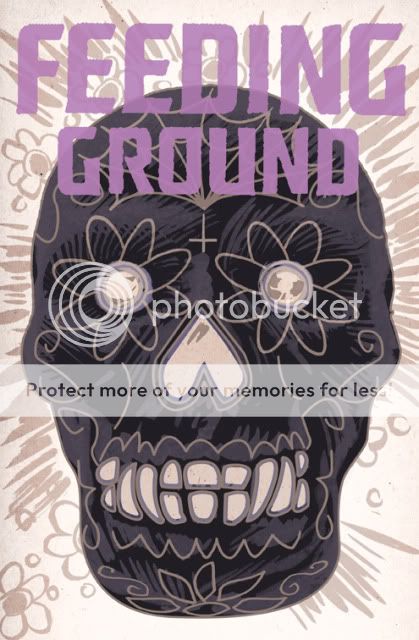
In the meantime, here's a sneak peek at the cover to Issue 3. As an inverted version of the traditional Mexican "Sugar Skull," it speaks to the true nature of one of our principal characters.


Friday, August 13, 2010

FEEDING GROUND _ Read all about it!


I'm currently wading in ink trying to finish up pages for Issue 3 but I thought I would share links to our first bit of press for FEEDING GROUND.

Both come from the Comic Box column in The Jersey Journal and NJ.com written by William Kulesa. When I was living in Brooklyn, my dad had been cutting out columns of William's reviews for me and it was surreal to talk with him and be featured in the paper.

The first is a personal profile/ interview (complete with picture!). So cool to be able to share some early influences and talk a little more about the pitch process.
http://www.nj.com/columns/jjournal/i...900.xml&coll=3

And THIS, is one helluva well-written review. It's our first one and such a relief to hear that someone understands what we are going for and that we are delivering on the page. I realize that we will be getting some negative and middling feedback but this one certainly speaks to our intentions and is a warm welcome into the world.
http://www.nj.com/columns/jjournal/i...240.xml&coll=3

Get a load of this excerpt:

"True horror is far greater than the fear of a monster or even something so simple as death. It is this encompassing of innumerable meanings of horror that "Feeding Ground" does so well, even in the first issue."

Thanks to William, the Jersey Journal, and my partners Swift and Chris!

Also, below is the ad we ran in the program to Casey Safron's 2010 Animation Block Party. Always a fun summer event - thanks Case!

Monday, August 2, 2010

FEEDING GROUND _ Solicitation and Podcast

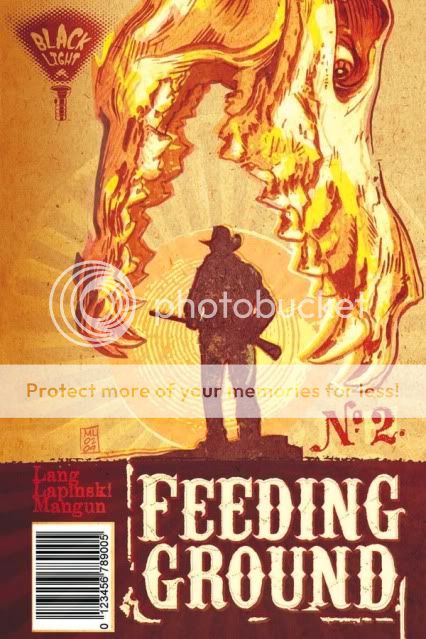
In case you missed it, here you have the solicitation for FEEDING GROUND Issue 2 and a link to my first Podcast appearance! With this cover image, I was trying to create a new doomed iconography based on the Christian symbol of the Sacred Heart as well as the Mexican lotería card for "Corazón" to communicate the cursed blood that flows within.


FEEDING GROUND #2 (of 6)
Retail Price: $3.95 U.S.
Page Count: 64 pages
Format: saddle bound, 6.625” x 10.25”, full color
Written by Chris Mangun and Swifty Lang
Illustrated by Michael Lapinski
Cover by Michael Lapinski

A local enforcer, Don Oso, terrorizes the Busqueda family as their father Diego makes a solitary trek home through the horrors of the Devil’s Highway. Meanwhile, US Border Patrol agents unearth a shocking discovery that threatens to reveal a secret buried in the desert for generations. Also included are 24 pages of bonus content in Spanish!

T +13 (Contains material suitable for teen readers age 13 and above)


I'm a regular listener to The Ink Panthers Show podcast (a "Fanther") and I was nervous and excited to be asked on as a guest star. Hosted by famed cartoonists Mike Dawson and Alex Robinson, the show is ostensibly a comic book podcast but the topics are all over the map and the main draw is the funny, familiar, conversation held between Mike and Alex.

On this episode, I reveal the details of that crucial moment when Archaia accepted my FEEDING GROUND pitch and then the conversation veers off into other bits ranging from Pixar to veganism and my love of cuttlefish.

You can listen off of their website or download and subscribe to the podcast for free through the iTunes store.

Ride the Panther!

Friday, July 30, 2010

San Diego COMIC CON 2010 _ The Big Wrap-up


Although FEEDING GROUND doesn't come out until September, writer Swifty Lang and I were invited out to San Diego Comic Con by Archaia to sign posters at their booth, participate in the Archaia: All-Access panel, and enjoy the big show.

There was much to get my inner fanboy excited (the Walking Dead booth, TOYS!, all things Thor) but it was a great occasion to meet the extended Archaia family and talk with some of my favorite creators. Everyone could not have been nicer or more down to earth.


Some other highlights below:

- The Silkscreen Poster Art of Gary Musgrave and Jordan Crane. If anyone is ever looking to get me a gift, simply add all of them to your shopping cart. Such a vibrant aesthetic and powerful images that inspired me to push my FEEDING GROUND work even further. There is always something out there to remind you that you can always do more.


- The "Quickie" postcard and order slip art of David Palumbo. Dave's a meticulously talented fantasy painter but his looser ink work and figure studies have real life to them and show off how much he just "gets it."


- Constructive criticism from artist Steve Lieber (Whiteout, Underground). Swift and I were honored to start our Con by chatting with Steve and receiving a critique of our work. A student of The Kubert School and great comics in general (check out Alberto Breccia) he is the consummate comic storyteller with a full command of the devices of the medium. Whether the frozen wasteland of Whiteout or the flooding cave system of Underground, his site-specific environments were a major influence on how I approached rendering the desert of FEEDING GROUND.

Some of his feedback:

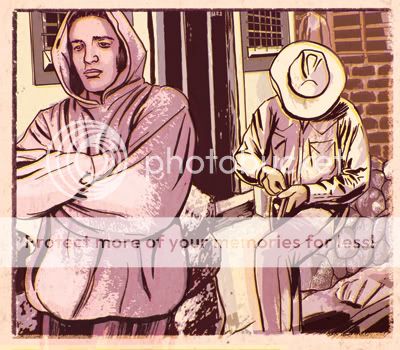
1) Always draw each figure in a pose that creates a clean and interesting silhouette with clear information. For example, although I wanted the man below to be hiding the fact that he is removing bullets from the gun, I should have rotated the figure or camera so that the gun was free from his body and created a distinct outline.


2) Be wary of placing figures with different horizon lines and creating a tilted stage. Staging figures in a believable space is definitely a craft I am trying to work on.

3) Feel free to occasionally drop background information from the panel. Although I have been diligent about rendering and establishing a real space around the figures, removing it also allows breathing room and encourages the reader to complete the scene in their mind.

In the end, much appreciated and Steve was also cool to give us a shout out on Twitter calling FEEDING GROUND an impressive debut.

All said, what an incredible professional and fan-lovin' experience that few media can foster.

And, Thor helmets!

Wednesday, July 21, 2010

FROZEN DARK _ The DON'T LOOK! Anthology


Faithful readers of this blog might remember mention of a horror short called FROZEN DARK.

Swifty, Chris, and I created it for a black and white horror anthology edited by friend and co-worker Rick Ritter. Based on a story by Chris, FROZEN DARK deals with that common childhood fear of having to make a midnight trip to the bathroom, except this tale is set in the frozen wasteland surrounding a Tibetan orphanage.


Now, Rick and cover artist David Palumbo are bringing a pitch book of the anthology (titled DON'T LOOK!) to San Diego in search of a publisher. The book also features stories from other NYC Animation heavyweights Bob Algeo, Paul Zdanowicz, and Scott Cooper.


Knock 'em dead, guys!

Sunday, July 18, 2010

FEEDING GROUND _ The Pitch


Now that the FEEDING GROUND release date is fast approaching (end of September) I thought I'd cover the structure of our initial pitch. You can go back to some of my earliest posts to take a look at some more of the content pages included in our Pitch Book.

The first thing we decided was to format the pitch as a comic with cover art and the same dimensions and binding as an ordinary floppy. Any tips we had researched always recommended the inclusion of 5 pages of comic content so this package seemed like a natural fit.

After a title page and table of contents, we immediately went into our proposal. It essentially starts with a two-sentence summary of the concept as a hook, then expands into a one-page description, and, finally an issue-by-issue breakdown on the next page.

We treated the text like any conversation with a stranger. Pique someone's interest at first, and then have the information to merit their attention. And, one important tip we were given was to tell your prospective publisher the ending. Mysteries are good for the reader but most publishers would want to know exactly what they're signing on for.

Also, mythology is not the story. While the story has a beginning, middle, and end, we chose to include a separate page about the overall mythology we were establishing because we felt it was a unique angle on a familiar topic.

From there, we had a page of character sketches and bios and a map to start to populate the world in the mind of the reader. That leads to the section that represents 5 pages of finished material. Of these pages, only one has made it into our final book relatively unchanged. However, an editor will be able to judge basic storytelling ability and execution based on these pages. Additionally, we included a few sample covers to communicate the identity of the series as it would appear on the racks.


Finally, we ended with the full Issue 1 script as well as some additional pin-up art. Unlike screenplays, comic scripts do not require particular formatting but Swifty followed a general screenwriting model. Not required, but we also chose to add panel breakdowns for each page.

There isn't any one correct way to present your ideas, but, this is the one that worked for us.